JDWNRH

Anesthesiology

The Department of Anesthesiology at Jigme Dorji Wangchuck National Referral Hospital plays a central role in providing comprehensive perioperative care, critical care services, pain management, medical education, and research. Our team of anesthesiologists, trainees, and healthcare professionals works together to ensure the highest standards of patient safety and comfort throughout the surgical journey.

In addition to providing anesthesia services, the department is actively involved in the management of acute and chronic pain, intensive care medicine, and the training of future anesthesiologists and anesthesia technicians. We also serve as the national referral center for anesthesia services and contribute significantly to the development of anesthesia care across Bhutan.

Our Mission

To provide safe, equitable, and patient-focused anesthesia care through evidence-based practice, multidisciplinary collaboration, and modern technology. We are dedicated to continuous professional development, research, and education, ensuring the training of highly competent anesthesia professionals while contributing to Bhutan’s healthcare goals. Through compassion, respect, and integrity, we strive to deliver exceptional care tailored to the needs of every patient.

Our Vision

To become a leading center of excellence in anesthesia and perioperative medicine within the region by delivering innovative, compassionate, and safe patient care while advancing education, research, and clinical practice.

Our Core Values

Patient-Centered Compassion

We treat every patient with empathy, dignity, and respect, recognizing and responding to their individual physical, emotional, and cultural needs.

Clinical Excellence and Safety

We maintain the highest standards of anesthesia practice through evidence-based medicine, robust safety measures, and continuous quality improvement.

Collaborative Teamwork

We value open communication, mutual respect, and multidisciplinary cooperation to provide seamless perioperative care and support successful surgical outcomes.

Equity and Accessibility

We are committed to ensuring all patients receive timely, inclusive, and equitable anesthesia care regardless of their background or circumstances.

Integrity and Accountability

We uphold ethical principles, transparency, and professionalism while remaining accountable to our patients, colleagues, and the wider community.

Innovation and Lifelong Learning

We encourage innovation, embrace advancements in medical technology, and promote a culture of continuous learning, education, and professional growth.

History of Anesthesia Services in Bhutan

Anesthesia services in Bhutan began in the late 1970s and early 1980s at Thimphu General Hospital under Dr. G.C. Sharma from Assam, who transferred to Trashigang Hospital in 1983, leaving Dr. Sarkar to continue the service until UN Volunteer anesthetist Dr. Phone Kyaw took over in 1984. A major milestone occurred in 1983 when Dr. Yanki Shipmo joined Thimphu General Hospital and founded Bhutan’s first Nurse Anesthetist Training Program to address severe staff shortages. In February 1988, Mr. Singye and Mr. Lungten Jamtsho became the first Bhutanese nurses selected for this specialized track; after six months of rigorous training, they provided autonomous anesthesia services at Gelephu General Hospital and Tsimalakha Hospital, laying the groundwork for a system that now includes over 30 nurse anesthetists nationwide.

In early 1998, Bhutan’s first nationally qualified anesthesiologist returned to work at JDWNRH, served at the Military Hospital in Dewathang during security difficulties, and officially entered civil service in January 1999. Later that year, Dr. Singay Dorji became the first Head of the Department of Anesthesiology, where he upgraded clinical services, drugs, and equipment, and established JDWNRH’s first three-bed intensive care unit (ICU). 

Dr. Gosar Pemba succeeded him as department head from 2009 to 2014, modernizing services and helping establish Bhutan’s anesthesia residency training program before becoming JDWNRH’s Medical Superintendent, at which point Dr. Jampel Tshering took over leadership. Ultimately, Bhutan’s anesthesia services have evolved from simple open-drop ether methods into a modern system featuring advanced anesthesia workstations, sophisticated monitoring, advanced critical care, labor analgesia, comprehensive pain management clinics, and ultrasound-guided regional anesthesia.

Anesthesia Services

Our department provides a comprehensive range of anesthesia and perioperative services, including:

Pre-anesthesia assessment and patient optimization

Intraoperative anesthesia management

Postoperative recovery and pain management

Sedation services for procedures performed outside the operating room

Labor analgesia for pain relief during childbirth

Acute pain management

Chronic pain management services

Intensive care and critical care medicine services

Anesthesia Residency Program

Conducted in collaboration with the Postgraduate Medical Education Program under Khesar Gyalpo University of Medical Sciences of Bhutan.

Anesthesia Technician Training

A diploma program conducted in partnership with the Faculty of Nursing and Public Health to develop skilled anesthesia technicians for the national healthcare system.

For Public Notice

For Patient information to be included in the web, so that patient can go through and understand it before they come for anesthesia services

Types of Anesthesia Services

The type of anesthesia you receive depends entirely on your specific procedure, medical history, and personal preferences. Your anesthesia provider will select the safest option for you.

General Anesthesia (GA)

This option puts you into a deep, controlled sleep for the entire procedure. You will be completely unconscious and feel no pain. Medications are given through an IV or breathed in through a mask.

Regional Anesthesia

This blocks pain in a large part of the body, such as from the waist down (like an epidural or spinal block used for childbirth or joint replacements). You remain awake but completely numb in that area.

Peripheral Nerve Blocks

This is a targeted injection that temporarily numbs a specific nerve or group of nerves. It is commonly used for surgeries on a single limb, like a shoulder, hand, or knee. It provides excellent pain relief that lasts well into your recovery at home.

Sedation (Monitored Anesthesia Care)

Often called "twilight sleep," this ranges from mild relaxation to a deep sleep where you can still breathe on your own. It is typically used for shorter, less invasive procedures like colonoscopies. You will be comfortable and likely won't remember the procedure.

Pre-Operative Assessment

Days before surgery.
An anesthesia provider will review your medical history, current medications, and past experiences with anesthesia. This is your time to ask questions and share any concerns.

Strict Fasting Rules (NPO)

The night before.
You will receive explicit instructions on when to stop eating and drinking. Following these guidelines perfectly is vital to prevent stomach contents from entering your lungs while you are asleep.

Day-of Verification
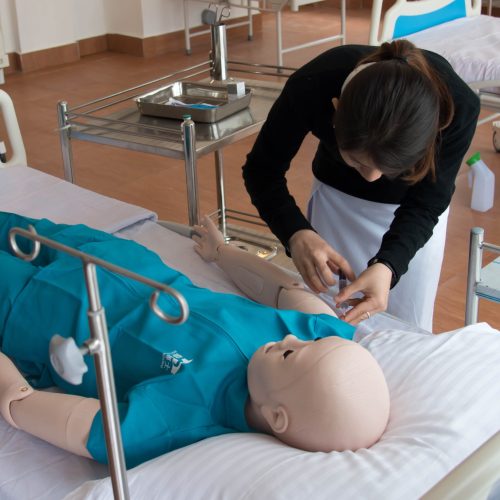
Upon arrival at the facility.
The clinical team will check your vital signs, place an intravenous (IV) line, and have you confirm your identity and the planned procedure multiple times as a strict safety protocol.

The Pre-Op Holding Room

Minutes before the procedure.
You will meet your dedicated anesthesia provider right before heading into the operating room. If you are anxious, they can give you a mild sedative through your IV to help you relax before you even reach the room.

A Quick Reminder on Safety

Always arrange for a responsible adult to drive you home and stay with you for 24 hours after receiving anesthesia, as the medications can temporarily affect your reflexes and judgment.

When you are fully awake, your body has natural, automatic reflexes (like swallowing and coughing) that act as a safety valve. They prevent food, stomach acid, and liquids from accidentally slipping down into your windpipe and lungs.

When you receive anesthesia—especially deep sedation or general anesthesia—your body goes into a deep sleep, and these protective reflexes are temporarily turned off.
The Risk

If there is food or liquid in your stomach while you are asleep, it can travel back up your esophagus and flow directly into your lungs. This medical complication is called aspiration.
The Danger

Stomach contents are highly acidic. If they enter your lungs, they can cause severe inflammation, chemically burn the lung tissue, and lead to serious lung infections like aspiration pneumonia.
Time Before Surgery

What is Allowed / Disallowed

8 Hours Before

No heavy meals. This includes fried foods, fatty foods, or meat, which take a very long time to digest.

6 Hours Before

No light meals or non-clear liquids. Stop eating toast, cereal, or candy. Discontinue milk, creamer, orange juice, and mints.

Up to 2 Hours Before

Clear liquids ONLY. You may have small amounts of water, plain black coffee (no milk or sugar), clear tea, or apple juice.

2 Hours Before

Absolutely nothing by mouth (NPO). Do not swallow anything—including water, gum, or tobacco—past this mark..

A Pre-anesthesia Check-up (PAC)—sometimes called a pre-operative assessment—is a dedicated appointment before your surgery where you meet with an anesthesia provider.

Rather than treating anesthesia as a “one-size-fits-all” procedure, this visit allows the medical team to design a personalized safety plan tailored specifically to your body.

Why a Pre-anesthesia Check-up is Crucial?

The main goal of the PAC is your safety and comfort. It gives your care team a complete roadmap of your health so there are zero surprises on the day of your procedure.
This is the heading

Lorem ipsum dolor sit amet, consectetur adipiscing elit. Ut elit tellus, luctus nec ullamcorper mattis, pulvinar dapibus leo.

This is the heading

Lorem ipsum dolor sit amet, consectetur adipiscing elit. Ut elit tellus, luctus nec ullamcorper mattis, pulvinar dapibus leo.

In early 2017, we addressed the acute shortage of anesthesia service providers by recruiting two Burmese anesthetists and welcoming Dr. Garry from the USA to volunteer in the ICU. 

Statistics for anesthesia services in 2017

Accessibility Toolbar